


If your inbox is full of irrelevant pitch decks you are doing something wrong.
Founders will only reach out correctly if you make it obvious what you want.
Fix your public narrative, give practical submission instructions, and make triage easy.
You are in a service business.
You may write long essays about markets, but founders do not have time to decode vague mission statements.
If you want fewer irrelevant decks and more founders who actually fit, change the ways they discover you.

Frontier Deal Flow 🎯
Companies struggle to reach the right investors. Investors struggle to find signal.
Frontier Deal Flow is a monthly curated database by 22nd Century Frontier, connecting high-quality companies with thousands of:
Angel investors, VC funds, corporate venture capital arms, venture syndicates, private equity firms, family offices, institutional investors, strategic corporate partners, and more.
Why submit:
• Get in front of serious investors actively looking for opportunities
• Share your raise in a clear, high-signal format
• Skip cold outreach
Submissions are completely FREE. For the March & April issue, submissions close 30 April, and the report goes live 1 May.
Key Takeaways
Be explicit
Founders only reach the right VCs if you tell them who you are, what stage you invest in, and how to contact you.
Build a single “Raise from us” hub on your website
Thesis, what you do and do not invest in, and an exact outreach template.
Shorten response time and automate triage
Fast, helpful replies and a few rejection templates preserve goodwill and surface future opportunities.
Use founder-facing content
Short videos, clear case studies, and concrete traction thresholds teach the market and reduce bad inbound.
Measure and iterate
Track inbound quality, response time, and conversion. Small changes to site copy and process multiply signal and save hours.
Table of Contents
1. The Problem In Plain Language
You get too many decks.
Founders get ignored.
Everyone is frustrated.
Most founders do not know what you invest in or how you like to be approached.
They also do not have the time or skills to hunt down your preferences.
So they spam the obvious channels and hope.
That is on them.
It is also on you.
If you rely on founders to reverse engineer your mandate from a sparse About page, they will guess wrong.
If you want better inbound, make it simple for the right founders to find you and for the wrong founders to self-filter out.
2. Clarify Your Identity: The Simplest, Highest ROI Move
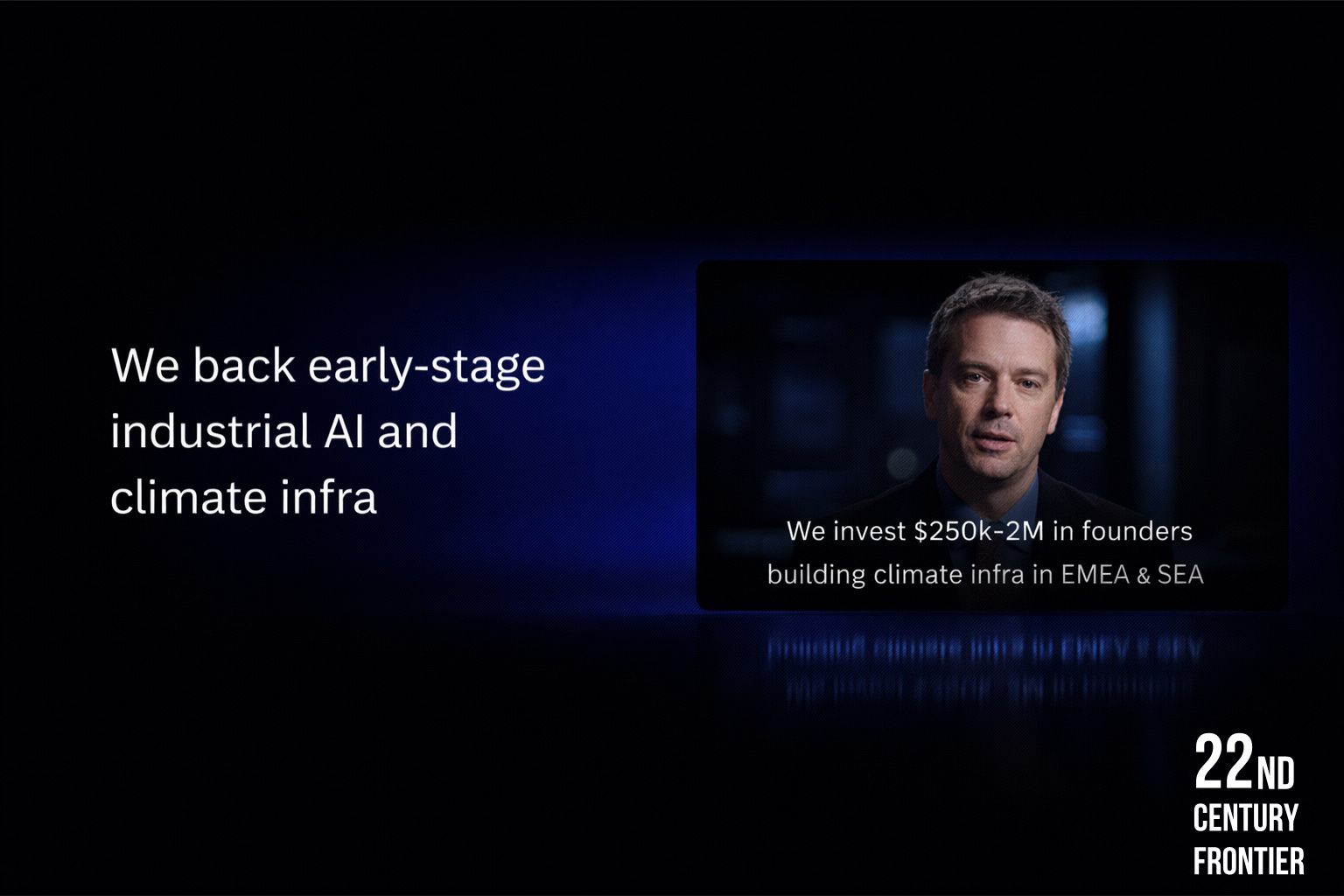
Make it fast and obvious what you do.
Create one clear landing area that answers four founder questions in under 20 seconds:
Who you are
What stage and check sizes you write
Which sectors and geographies you prefer
How founders should reach you
3. Page Structure That Triages Automatically
Add a single visible menu item:
Raise from us
Under it, four quick pages.
Our thesis - short and specific
What we invest in - bullets: stage, ticket, example traction metrics
What we do not invest in - be explicit, and briefly explain why
How to reach us - required pitch format and preferred intro channels
What to include on the “What we invest in” page:
Example ticket sizes with ranges, e.g., “$200k - $1.5M”
Example traction anchors, e.g., “pre-seed: prototype + 3 pilots; seed: $250k ARR or pilot revenue”
1 to 3 case studies that show how you helped a portfolio company scale
Why “what we do not invest in” matters:
It saves your inbox and makes your no more credible.
Explain capital intensity or regulatory complexity when saying no to hardware, biotech, or banks.
4. Make The Outreach Process Simple And Repeatable
Tell founders exactly how to reach you.
Offer three routes with clear expectations.
Warm intro from a named list of acceptable introducers
Short intake form (3 fields + deck upload) for cold founders who fit the checklist
X / LinkedIn DM for extremely early signals if you accept them
Provide an ideal email template so founders stop sending 10-line novels.
Example instructions:
Subject: [Company] - $X raise - traction: monthly revenue / pilots / pipeline
One-paragraph problem + solution. One line traction. One ask. Link to deck.
If you insist on warm intros only, say it clearly.
If you accept cold, give the exact checklist required.
Either approach is professional.
5. Use Content And Signals To Educate The Market
Write short, founder-facing posts that answer the questions founders actually ask. Topics that pay back:
“Here is the traction we need to review a seed round”
“How to structure a 1-page intro email to this firm”
“Three examples of portfolio companies and why we led”
Video is especially powerful.
A one-minute clip from each partner explaining what they look at reduces time wasted on both sides.
People triage by personality as much as by metrics.

6. Build Simple Internal Rules And Automation
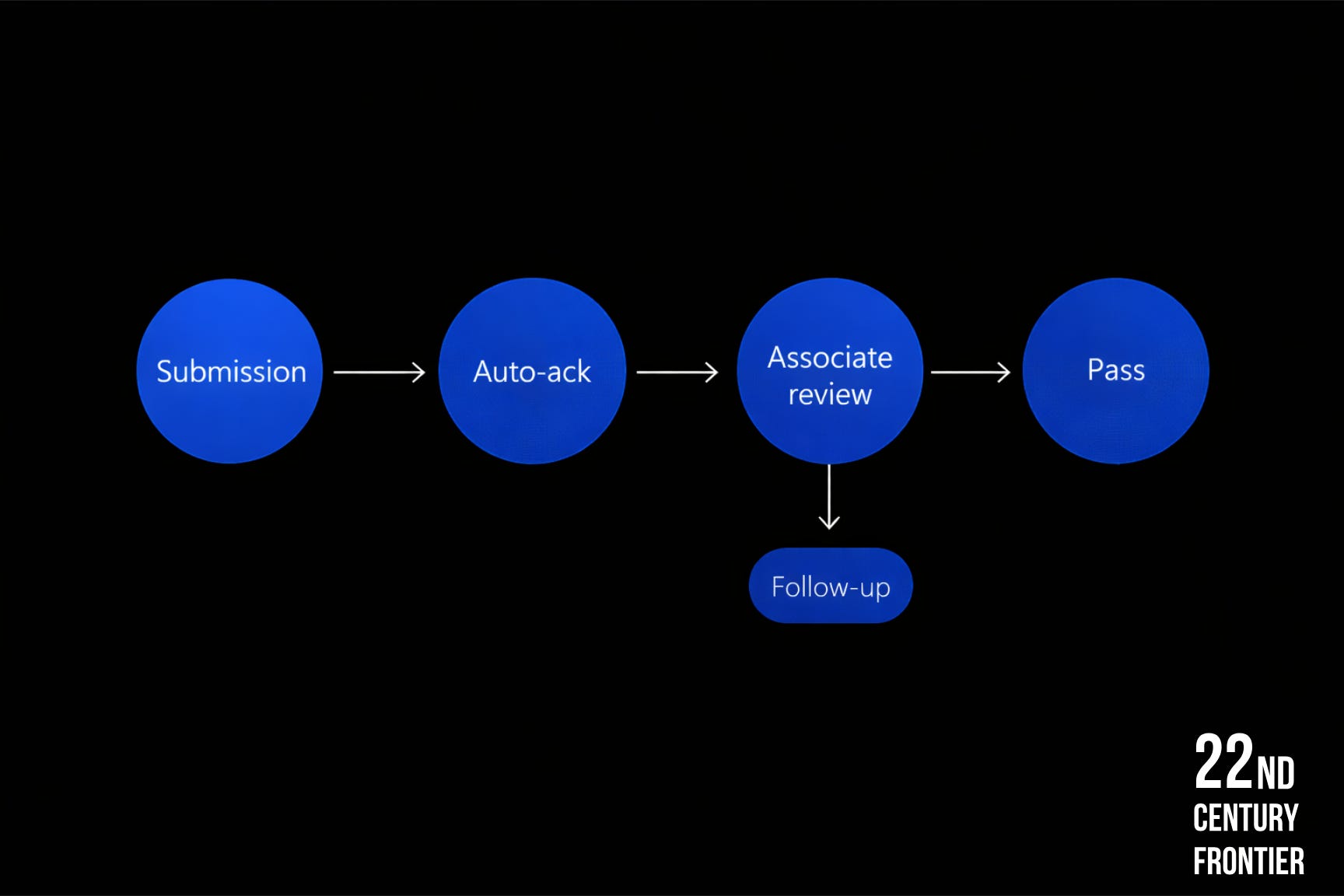
Your front desk process should be:
Auto-acknowledge every submission within 2 hours with a clear timeline
Associate-level first triage within 48 hours using a checklist (stage, traction, geography)
If not a fit, send a short, helpful no with a reason
Templates scale.
Use a small set of tailored rejection templates that still provide constructive next steps.
Founders who get a fast, sensible no will remember you positively.
You can explore this further in our research on pre-investment processes, conducted in 2021 with several of the largest London-based VC funds.
7. Advanced Moves That Differentiate You
Publish example decks and a “what we liked” note. That trains founders and saves time.
Offer a rolling office hours slot for founders who meet basic criteria. Ten 15-minute slots per month reduce bad inbound and boost signal.
Partner with accelerators and syndicates for curated inbound. If you make it clear which accelerators you respect, founders know to apply there first.
Review curated reports like Frontier Deal Flow. A monthly, vetted deal flow database connecting high-quality companies with active investors, helping reduce noise and surface stronger opportunities efficiently.
Track your own metrics: inbound per week, % qualified, time-to-response. Aim to halve time-to-response in 90 days.
A good example of explaining your signal publicly is when some firms publish stage thresholds or model portfolios. It helps the whole market.
8. Final Thought
If you are tired of low-signal inbound, change the things you control.
Spell out your thesis, make outreach obvious, teach founders how to reach you, and automate basic triage.
That reduces noise, surfaces better founders, and improves your brand.
You do not need to be more mysterious to be exclusive.
You need to be more precise.
Do that and the deal flow will get a lot better.
Continue Exploring the Frontier
If this piece resonated, you may want to go deeper.
Here are three recent articles readers found especially useful:


Each one tackles a different part of the same challenge: building with intent, not hope.
If you are serious about shaping the future rather than reacting to it, you are exactly where you should be.
WHY SUBSCRIBE | PREMIUM RESOURCES | ENTERPRISE PLAN | ADVERTISE
I like this a lot and I think that some VC is already do this quite well like NFX does this really well and you sort of gave me an idea which is founders should do exactly the same thing on their website that when people come to look at them, they can answer the same questions that would use to qualify the investment opportunity
What do you think?
Clear guidance and a practical submission process will attract founders who actually fit your criteria.