


Every founder eventually reaches the same fundraising milestone.
Someone asks for the financial model.
Cue the late nights in Excel.
Revenue curves suddenly become hockey sticks.
Expenses become suspiciously efficient.
Profitability somehow appears just before the cash runs out.
Everyone knows the game.
Including investors.
The uncomfortable truth is that almost nobody expects your five-year forecast to happen.
Markets change.
Customers behave differently.
Competitors emerge.
AI changes pricing.
Hiring takes longer.
Distribution channels evolve.
Your numbers will be wrong.
That is not the problem.
The problem is building a model that teaches nobody anything about how your company actually works.

Frontier Deal Flow 🎯
Companies struggle to reach the right investors. Investors struggle to find signal.
Frontier Deal Flow is a monthly curated database by 22nd Century Frontier, connecting high-quality companies with thousands of:
Angel investors, VC funds, corporate venture capital arms, venture syndicates, private equity firms, family offices, institutional investors, strategic corporate partners, and more.
Explore our latest Frontier Deal Flow issue.
Why submit:
• Get in front of serious investors actively looking for opportunities
• Share your raise in a clear, high-signal format
• Skip cold outreach
Submissions are completely FREE. For the next issue, submissions close 30 August, and the report goes live 1 September.
Key Takeaways
Investors do not believe your forecast. They evaluate the quality of your thinking behind the numbers.
A financial model should be an operating tool for the company, not a fundraising document created for investors.
Every assumption should have a reason, evidence, and a clear connection to business outcomes.
The strongest founders build models that prepare for uncertainty instead of pretending they can predict the future.
A great financial model turns capital into measurable actions, helping teams align, execute, and reach the next milestone.
Ready to become one of our 100 Founding Members?
Table of Contents
1. Investors Are Buying Your Thinking, Not Your Forecast
The best investors rarely ask,
“Will these numbers happen?”
Instead they ask,
“Why do you believe they could?”
A good financial model explains how your business creates value.
Imagine two climate-tech startups.
One predicts £75 million in revenue within five years.
The other explains:
how many industrial customers they need
average contract size
implementation timelines
expected renewal rates
installation capacity
gross margins at scale
Only one of those companies understands its own business.
The second founder might still be wrong.
But they are wrong intelligently.
That matters.

2. A Model Should Explain Cause And Effect
Most financial models answer:
“What do we hope happens?”
Great financial models answer:
“What causes it to happen?”
Revenue should never appear because you typed a larger number.
Revenue should appear because something measurable improved.
For example:
Instead of saying,
“Monthly revenue doubles.”
Show the chain.
Customer acquisition improves because paid advertising becomes more efficient.
Customer acquisition improves because referrals increase.
Average contract value increases because enterprise customers adopt premium plans.
Revenue retention improves because churn falls after product improvements.
Every output should have an input.
Every result should have a reason.
That makes discussions with investors dramatically better because you are debating assumptions, not defending fantasy.
3. Every Assumption Deserves Evidence
One of the fastest ways to lose credibility is presenting assumptions without explaining where they came from.
Founders often say:
“Our conversion rate will improve.”
Why?
“Our CAC will fall.”
Why?
“Our churn will decrease.”
Why?
Good answers come from evidence.
Evidence could include:
pilot customers
historical performance
customer interviews
industry benchmarks
pricing experiments
product analytics
comparable public companies
Even imperfect evidence is better than unsupported optimism.
When assumptions have sources, conversations become collaborative instead of confrontational.
4. Build Scenarios, Not Predictions
One model.
Three futures.
That is usually enough.
Instead of pretending certainty exists, build:
Conservative
Expected
Aggressive
Investors understand uncertainty.
They worry when founders pretend uncertainty does not exist.
Good scenario planning answers questions like:
What happens if hiring takes six months instead of three?
What if paid acquisition becomes twice as expensive?
What if enterprise sales cycles double?
What if pricing increases succeed?
What if customer retention improves faster than expected?
Founders who have already explored these possibilities appear dramatically more prepared.
Not because they predicted the future.
Because they prepared for multiple versions of it.
5. Your Financial Model Should Survive After Fundraising
One reason investors rarely spend much time reviewing early-stage models is simple.
Most models are abandoned immediately after the round closes.
The spreadsheet becomes fundraising theatre.
It should become operational infrastructure.
The best founders revisit their model constantly.
Weekly
Monthly
Quarterly
They compare:
planned hiring versus actual hiring
projected runway versus actual runway
customer acquisition costs
conversion performance
sales productivity
burn multiple
gross margin
revenue growth
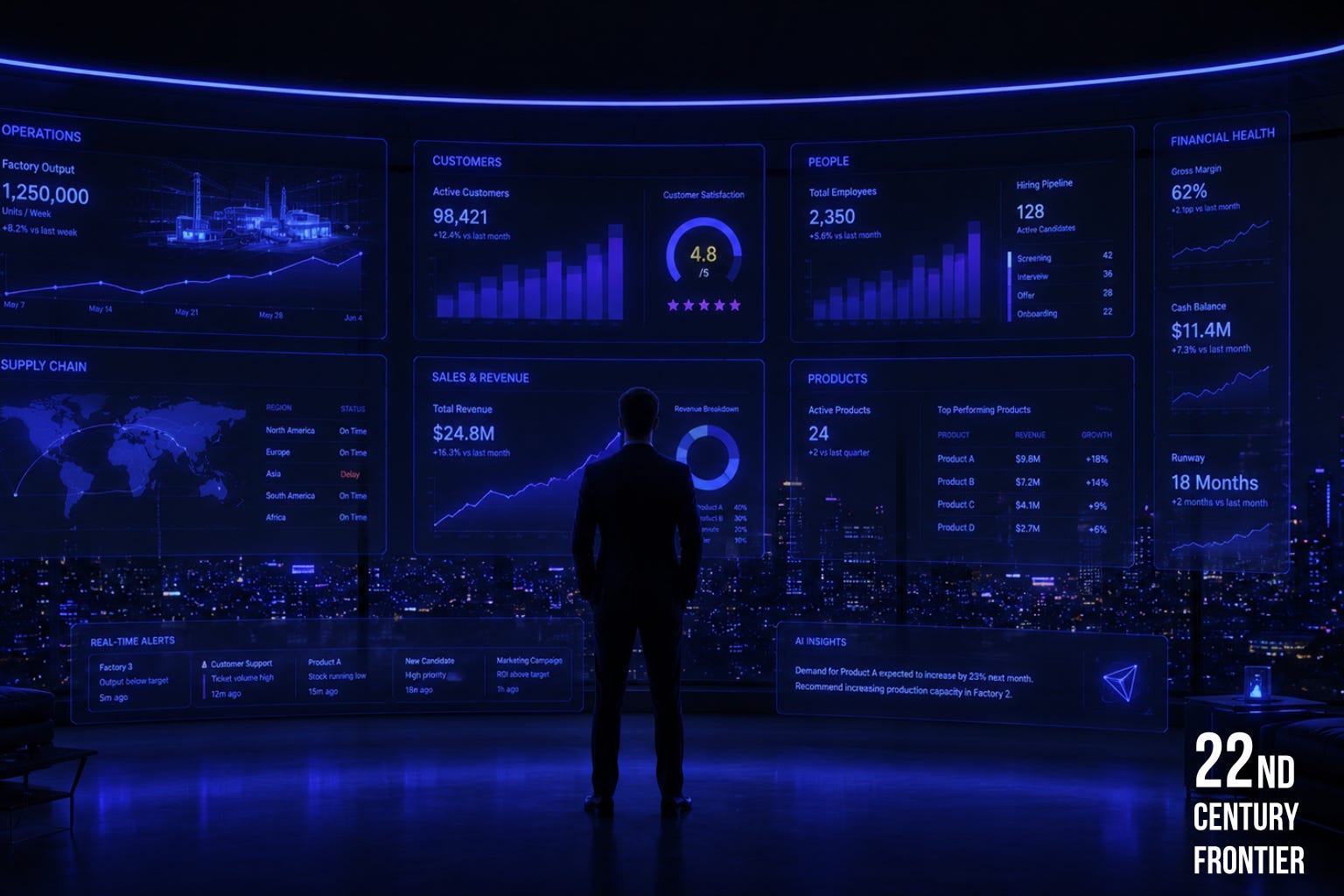
The model becomes a management dashboard.
Not an investor attachment.
6. The Mistakes Investors Notice Immediately
Founders often think investors are checking formulas.
Usually they are checking judgement.
Common warning signs include:
Everything improves simultaneously
Revenue rises.
Costs fall.
Margins expand.
Hiring accelerates.
Customer acquisition gets cheaper.
Nothing in business improves this perfectly.
Headcount is unrealistic
Many founders forget that growth creates organisational complexity.
Support.
Finance.
Operations.
Customer Success.
Legal.
Security.
Recruitment.
People rarely scale as neatly as spreadsheets suggest.
No relationship between funding and outcomes
If you raise £2 million instead of £4 million, what changes?
Many models cannot answer.
A good model shows exactly which milestones become delayed or accelerated depending on available capital.
No operational metrics
Revenue alone tells very little.
Investors want to understand the mechanics underneath:
Users.
Orders.
Contracts.
Retention.
Pipeline.
Sales productivity.
Activation.
Utilisation.
These explain why revenue exists.
7. Conclusion: Build A Model Your Company Can Actually Use
A financial model is not a document you create because investors expect one.
It is one of the clearest expressions of how you believe your company works.
Done properly, it aligns hiring, fundraising, execution, milestones, and decision-making into one coherent system.
Done poorly, it becomes an expensive spreadsheet that nobody opens again.
The irony is that investors rarely invest because your forecast reaches £100 million in revenue.
They invest because your assumptions demonstrate that you understand the journey between today’s reality and tomorrow’s ambition.
The spreadsheet is not the product.
Your thinking is.

Continue Exploring the Frontier
If this piece resonated, you may want to go deeper.
This article is part of our Financial Models collection, where we explore the ideas, frameworks, and strategies that help founders, investors, and operators make better decisions.
You can also explore our main topic categories to discover more insights across entrepreneurship, venture capital, fundraising, company building, and frontier technologies.
If you are serious about shaping the future rather than reacting to it, you are exactly where you should be.
WHY SUBSCRIBE | PREMIUM RESOURCES | ENTERPRISE PLAN | ADVERTISE
The interesting part often begins when reality stops cooperating with the spreadsheet.
That's when you find out whether the founder understood the assumptions underneath it, and whether they're willing to revise them.
A good model shows how you expect the business to work.
What you do when it doesn't says much more.
Investors buying your thinking instead of your forecast reframes the whole exercise.