


Angel investing looks simple from the outside.
You see a deck,
meet a founder,
decide whether to write a check,
and wait for the upside.
In reality, it is mostly uncertainty management.
The best angels are not the ones who say yes the fastest.
They are the ones who:
Learn to spot weak signals early,
back founders with real upside,
and avoid getting trapped by ego, FOMO, or bad structure.
Below are ten lessons I wish more angels learned sooner.

Frontier Deal Flow 🎯
Companies struggle to reach the right investors. Investors struggle to find signal.
Frontier Deal Flow is a monthly curated database by 22nd Century Frontier, connecting high-quality companies with thousands of:
Angel investors, VC funds, corporate venture capital arms, venture syndicates, private equity firms, family offices, institutional investors, strategic corporate partners, and more.
Why submit:
• Get in front of serious investors actively looking for opportunities
• Share your raise in a clear, high-signal format
• Skip cold outreach
Submissions are completely FREE. For the March & April issue, submissions close 30 April, and the report goes live 1 May.
Key Takeaways
Angel investing rewards patience and discipline, not speed.
The biggest outcomes take years to materialize and require long-term thinking.
Returns are driven by outliers.
A small number of investments will define your entire portfolio, so always evaluate upside potential.
Depth beats breadth.
Real edge comes from understanding a few markets deeply, not skimming many superficially.
Decision quality matters more than activity.
Knowing when to pass, price correctly, and think independently separates strong investors from average ones.
Access and alignment with founders is a competitive advantage.
The best opportunities go to investors who bring more than just capital.
Table of Contents
1. Angel Investing Is A Long Game
This is not a hobby with quick feedback.
The learning curve is slow, and the payout cycle is even slower.
You will not become sharp by reading a few pitch decks.
You become sharp by:
Seeing many of them,
comparing notes,
and watching what happens over time.
A portfolio also takes time to build.
That is why patience is not passive in angel investing.
It is strategic.
If you expect instant clarity, you will probably overreact to noise.

2. Think In Outliers, Not Averages
Angel returns are shaped by power laws.
Most companies will not return the fund.
A few winners can matter disproportionately.
That means every investment should be evaluated with the question:
Could this become a massive outlier?
Not every startup needs to become a giant, but it does need a believable path to significant scale.
A tiny niche with no expansion potential can be a fine business, but often not a compelling angel bet.
For example, a workflow app for independent photographers might be a nice business.
A platform for automating booking, payments, and customer management across the creative services economy is a much bigger story.

3. Go Deep In A Few Markets, Not Shallow Everywhere
General judgment is useful, but market-specific judgment is better.
If you understand a sector deeply, you can spot things others miss.
You notice what is truly novel, what is just a feature, and what is dead on arrival.
It is much more useful to know one or two markets very well than to pretend you know twenty.
Use the product.
Talk to buyers.
Read the technical landscape.
Understand the workflow.
If you are investing in logistics software, know the real bottlenecks in dispatch, routing, insurance, and driver behavior.
Surface-level understanding will not be enough.
4. Tech Leverage Usually Beats Human-Heavy Businesses
Great angel outcomes usually come from businesses with compounding leverage.
That leverage can be:
Software,
infrastructure,
network effects,
data,
a platform model,
or more.
A business that scales primarily by hiring more people can succeed, but it is usually less attractive from an angel perspective.
A company that automates claims review, predicts maintenance failures, or reduces compliance overhead has a clearer path to exponential value than a service business that simply adds headcount.
You do not need to be anti-services.
You just need to know what kind of machine you are backing.

5. The Best Founders Are Not Looking For Any Money, They Are Looking For The Right Money
If founders only want you because you have capital, you are interchangeable.
The strongest founders care about specific investors for a reason.
Maybe you understand the market.
Maybe your network is useful.
Maybe your experience helps them avoid expensive mistakes.
That kind of fit matters.
If you are getting inbound from founders who already know why they want you in the round, you are probably doing something right.
A founder raising an AI infrastructure startup may care less about your check size than whether you understand enterprise sales, technical hiring, and the pace of cloud adoption.
6. Founders Know The Context, So Listen More Than You Talk
Your job is not to out-explain the founders.
Your job is to understand:
Whether the problem is real
Whether the team can execute
Whether the market will reward the attempt
Founders often know much more about their space than investors do.
The best angels ask sharp questions, then listen carefully to the answers.
What is the buyer actually trying to avoid?
Why is this pain urgent now?
What happens if they do nothing?
Who else tried this and failed?
If you do not listen well,
you will miss the signal.

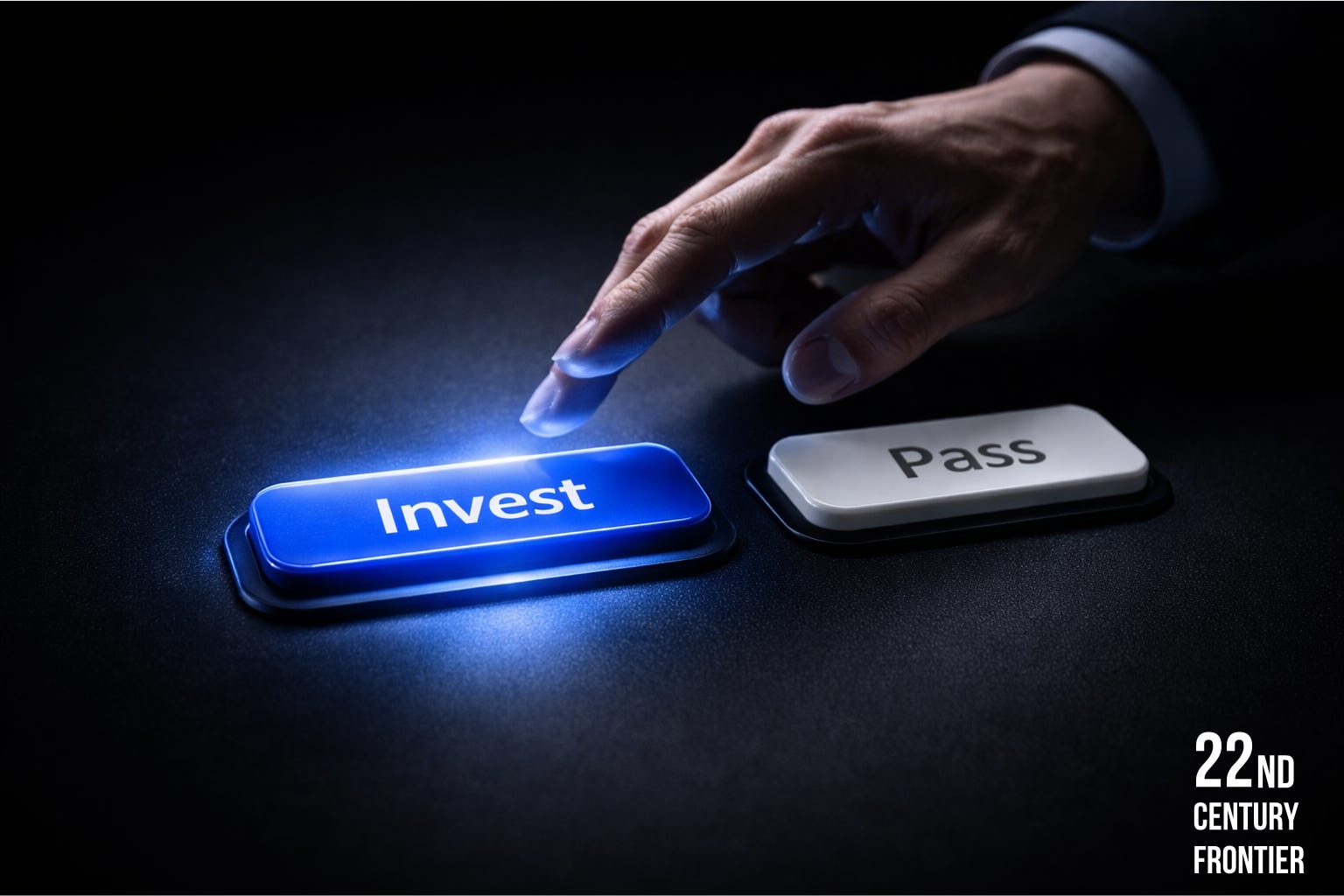
7. If You Are Unsure, It Is A No
A weak yes is usually a disguised NO.
If you feel yourself rationalizing the deal more than you are genuinely excited by it, step back.
There will always be:
Another startup
Another founder
Another market
You do not need to force a conviction that is not there.
A good angel check should feel like a clear, informed bet,
not a rescue mission.
8. Valuation Matters More Than Most Angels Admit
A great company at a silly price is often a mediocre angel investment.
That does not mean you should be cheap.
It means your entry point shapes your return ceiling.
If a company is still very early and already priced like a winner, the upside for a small check can disappear quickly.
Angel investing rewards discipline.
You want enough room for the company to become a breakout without needing a miracle to justify the deal.
The best investors understand that price is not only about dilution.
It is about what kind of outcome is still possible if the company succeeds.
9. Not All Advice Is Neutral
A lot of startup advice comes with hidden incentives.
Lawyers, later-stage investors, advisors, and even other founders may all be giving advice from their own position in the ecosystem.
Some of it is useful.
Some of it is self-serving.
Learn to ask why a person is telling you something.
The best angels build their own judgment instead of outsourcing it.
If someone tells you a company is uninvestable, ask whether they mean too early, too risky, too small, or simply not in their lane.

10. Practice Before You Write Checks
You do not need to invest to build pattern recognition.
Read deals.
Review decks.
Write down your thoughts.
Predict outcomes.
Revisit them later.
The habit of forming an opinion and then checking it against reality is one of the fastest ways to improve.
A lot of angel skill comes from disciplined repetition, not brilliance.
If you want better judgment, practice the judgment loop even when no money is on the line.
11. Final Thought
Angel investing is not about being the smartest person in the room.
It is about:
Developing a clear way to think,
learning where risk hides,
and backing a few founders whose upside can justify the uncertainty.
If you can learn:
To say no quickly,
think deeply in a few markets,
and stay patient long enough for the power law to work in your favor,
you will already be ahead of most angels.
The goal is not to be right on every deal.
The goal is to be disciplined enough to survive long enough for the right ones to matter.

Continue Exploring the Frontier
If this piece resonated, you may want to go deeper.
Here are three recent articles readers found especially useful:


Each one tackles a different part of the same challenge: building with intent, not hope.
If you are serious about shaping the future rather than reacting to it, you are exactly where you should be.
WHY SUBSCRIBE | PREMIUM RESOURCES | ENTERPRISE PLAN | ADVERTISE
The yes gets most of the attention, but the no is part of the job too.
Angels are going to say no far more often than they say yes, same as founders hear no far more often than yes.
That makes the quality of the no important as well. How they say it, how clear they are, and whether the founder leaves with anything useful.
Good investing usually looks slower and less exciting from the outside.