


If you do not know exactly who you are trying to reach, where they spend time, and what motivates them to act, you are wandering blindly.
This framework helps you stop guessing and start targeting with intent.

Sponsor Highlight: EuphoriaTech Group ✨
Your next growth sprint shouldn’t be guesswork. EuphoriaTech Advisory pairs founder-level strategy with hands-on execution to help startups and executive teams scale faster and smarter.
What they’re offering this week:
• Focused 30-minute 1:1 consultations — tactical, no-fluff sessions on Business Strategy & Scaling, Venture Capital Investments, LinkedIn Growth & Personal Brand, or any founder topic.
• Actionable outcomes: leave with prioritized next steps, a short roadmap, and testable experiments you can implement immediately.
• Who it’s for: founders, investors, senior operators, and execs seeking candid, practical guidance.

Key Takeaways
If you cannot clearly define who you are targeting, everything else becomes noise
Audiences exist in specific places. Searching everywhere guarantees weak results
People act based on their own incentives, not your enthusiasm or vision
Narrow focus produces faster learning and higher conversion than broad reach
Lack of response is data. Adjust definition, location, or message before investing more effort
Table of Contents
Why Most People Struggle With Finding Their Audience
The Truffle Hunting Mental Model
Step 1: Define the Truffle Precisely
Step 2: Know Where Truffles Actually Grow
Step 3: Use the Right Bait
Step 4: Create an Interest Profile Before Outreach
Step 5: Fish in Small, Specific Ponds
Step 6: Adjust Based on Reality, Not Hope
Conclusion: Dig Where the Truffles Are
1. Why most people struggle with “finding their audience”
Every week I speak to founders, creators, and operators who say some version of the same thing:
“We are not sure who our customer really is.”
“We are getting attention, but it is not converting.”
“We are talking to people, but nothing is clicking.”
This problem shows up everywhere:
Finding a technical cofounder
Selling a B2B product
Growing a newsletter
Hiring early employees
Testing a startup idea
The issue is rarely effort.
It is almost always direction.
To explain this simply, I use a mental model called Truffle Hunting.
2. The Truffle Hunting Analogy
Truffles are rare, valuable, and impossible to find by accident.
You do not stumble onto them by walking randomly through a forest.
Professional truffle hunters succeed because they understand three things:
What they are hunting
Where it can realistically be found
What triggers it to reveal itself
Miss any one of these, and you come home empty handed.
This maps perfectly to finding customers, partners, or talent.
3. Step 1: Define the Truffle Precisely
A truffle is not just “a mushroom”.
There are species, sizes, aromas, soil conditions, and price ranges.
In business terms, vague definitions kill momentum.
Examples of weak definitions:
“We are looking for a cofounder”
“Our product is for small businesses”
“We help creators grow”
These force the other person to do the thinking for you.
What good definition looks like
You should be able to describe your target so clearly that someone could recognize them instantly.
Instead of:
“We need a CTO”
Try:
“We need a backend-focused engineer with production experience in Python or Go, who has worked on data-heavy products and wants equity over salary.”
Instead of:
“Our customer is startups”
Try:
“Seed-stage B2B SaaS founders selling to operations teams, with fewer than 10 employees and no dedicated marketing hire.”
If you cannot define it, you cannot find it.

4. Step 2: Know Where Truffles Actually Grow
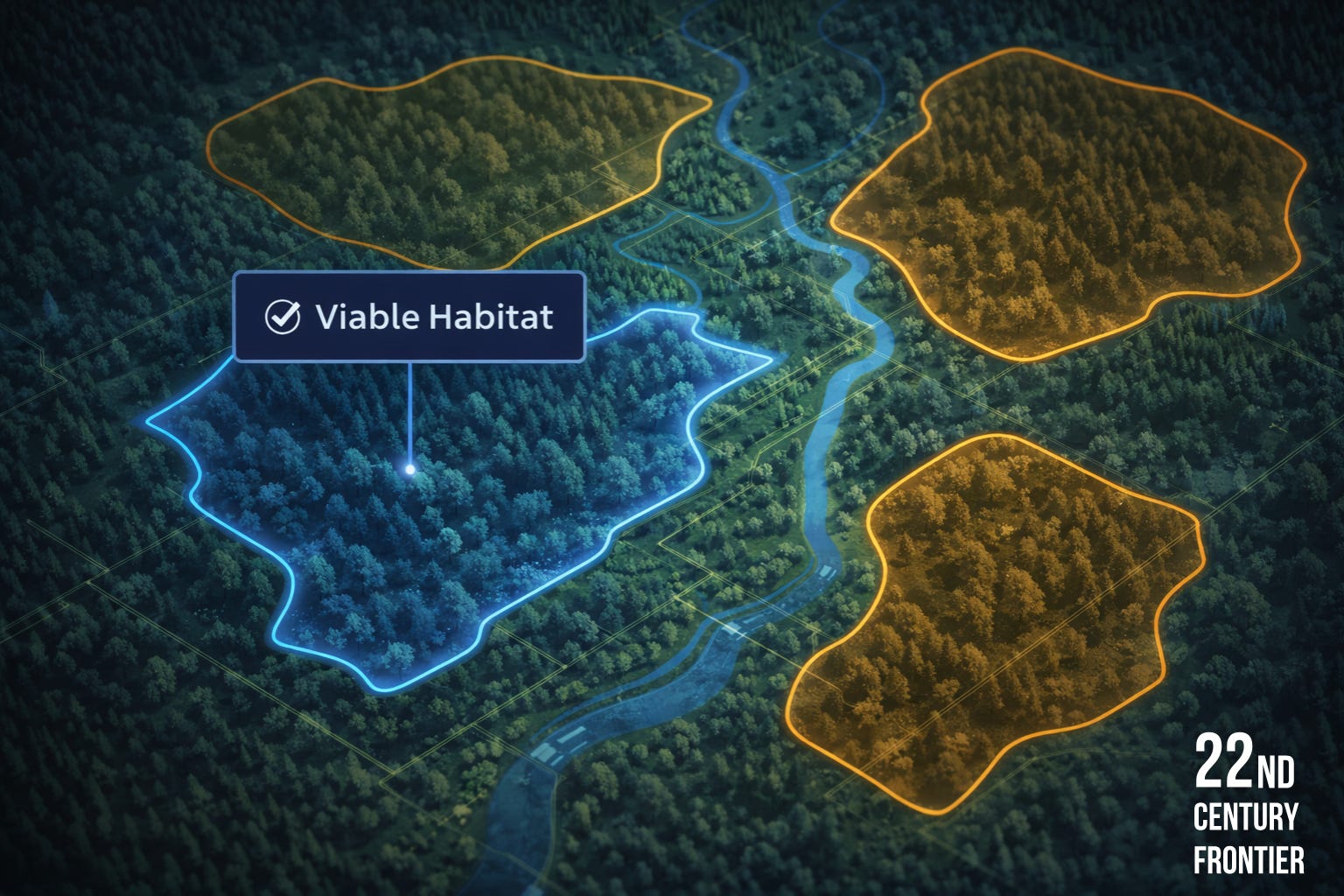
Truffles do not grow everywhere.
They require very specific conditions.
Certain trees.
Certain soil.
Certain climates.
Likewise, your audience does not live everywhere.
One of the biggest mistakes people make is searching where it is convenient for them, not where the target actually is.
Common false locations
Large generic networking events
Broad online communities
Popular social platforms without filtering
These places create noise, not results.
A developer who loves deep technical work is unlikely to hang out at flashy startup pitch nights.
A niche B2B buyer is not scrolling Instagram for solutions to operational problems.
How to find the right environment
Ask:
What forums do they read?
What tools do they already use?
What problems do they complain about publicly?
What events would they attend if no one was watching?
Examples:
Senior engineers often live in niche GitHub repos, Discord servers, or language specific subreddits
Operators gather around tooling communities like Notion, Airtable, or industry Slack groups
Creators cluster around platforms that directly affect distribution or monetization
If you already know one real example of your target, ask them directly where they spend time.
That shortcut alone saves months.
5. Step 3: Use the Right Bait
Even if you are standing in the perfect forest, truffles do not surface unless conditions are right.
Hunters use trained pigs or dogs because they respond to scent, not persuasion.
People are the same.
You cannot force interest.
You can only trigger it.
Motivation beats persuasion
If you are hiring:
What career risk are you removing?
What skill growth are you offering?
What status or autonomy do they gain?
If you are selling:
What pain are they actively trying to escape?
What outcome do they want faster?
What frustration already exists today?
Talking about what you care about rarely works.
Talking about what they already care about does.
Example:
A developer is far more interested in working with large datasets or elegant systems than your mission statement.
A buyer cares more about saving time or reducing errors than your roadmap.

6. Step 4: Create an Interest Profile Before Outreach
Once you know who you are targeting and what motivates them, prepare before engaging.
This is not manipulation. It is respect.
Learn their language.
Understand their incentives.
Know what signals credibility in their world.
If you are selling to finance teams, jargon matters.
If you are hiring engineers, technical clarity matters.
If you are targeting creators, distribution matters.
Your first message should feel familiar, not clever.
7. Step 5: Fish in Small, Specific Ponds
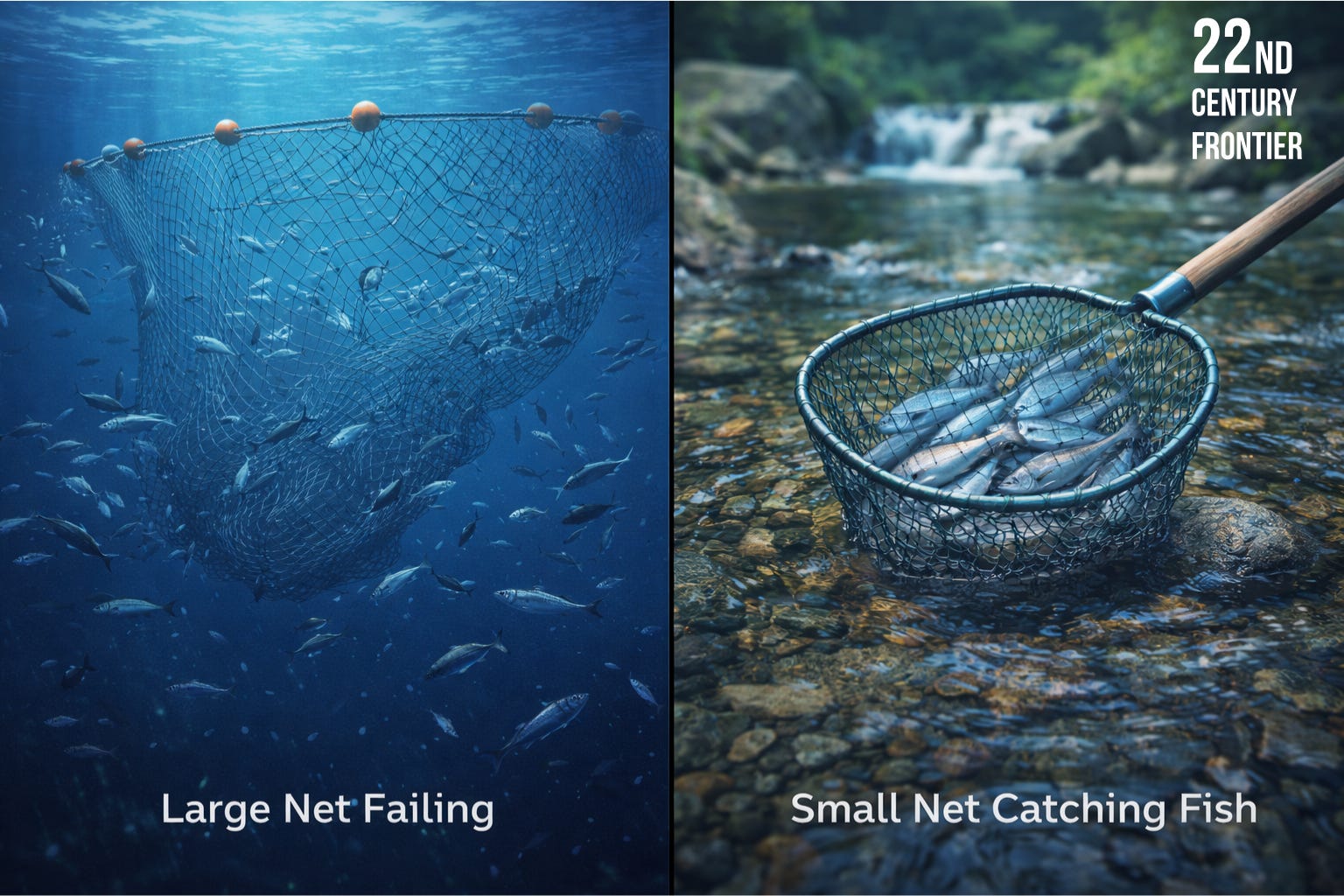
People complain they are “not getting traction”.
Often they are casting nets into oceans instead of streams.
Broad targeting creates weak feedback.
Specific targeting creates signal.
Large companies started small:
Professional networks began within universities or industries
Marketplaces launched in single cities
Communities formed around niche identities
Small ponds let you learn faster and adapt faster.
8. Step 6: Adjust Based on Reality, Not Hope
If you are in the right place, speaking the right language, and addressing real motivation, something will happen.
Replies.
Questions.
Engagement.
Referrals.
If nothing happens, do not rationalize.
Change one variable:
Definition
Location
Message
This is discovery, not failure.
9. Conclusion: Dig Where the Truffles Are
Effort is meaningless without direction.
You can work endlessly and still get nowhere if you are searching in the wrong forest.
This framework does not guarantee success.
It does reduce wasted motion.
Before you build.
Before you hire.
Before you spend money.
Ask yourself:
Do I know exactly what I am hunting?
Do I know where it actually lives?
Do I know what causes it to respond?
Dig deep, but dig in the right place.
Continue Exploring the Frontier
If this piece resonated, you may want to go deeper.
Here are three recent articles readers found especially useful:


Each one tackles a different part of the same challenge: building with intent, not hope.
If you are serious about shaping the future rather than reacting to it, you are exactly where you should be.
WHY SUBSCRIBE | PREMIUM RESOURCES | ENTERPRISE PLAN | ADVERTISE
Spot on and extremely pragmatic, dear Petar – bravo!
On Malta there are several consultants who take business executives hunting and clay-pigeon shooting.
Hunting teaches you exactly what Petar described: how to find the “prey”, lure it in, track it patiently, read the signs… the whole sequence.
And then the high-speed clay targets (flying at up to 90 km/h) force you to switch your mind into razor-sharp focus. Suddenly it becomes crystal clear what’s missing to close the deal with a person or a company… because landing the contract is essentially the same as making that one precise, perfectly timed shot.
Thank you for the content! As always – sharp, valuable, and genuinely useful! 🚀
big fan of this truffle hunting analogy. So much wasted effort comes from searching everywhere instead of knowing exactly where to dig.