


There is a strange imbalance in the startup world.
Some people with deep talent, strong networks, and real execution ability struggle for years to find a single idea worth pursuing.
At the same time, others with very little context or experience seem to stumble into ideas that look compelling on the surface.
This leads to a familiar question:
“Is there a method for finding a good startup idea, or is it just luck?”
The uncomfortable truth is that great ideas rarely appear fully formed.
They emerge from patterns, frustration, and exposure to reality.
There is no magic brainstorm.
But there is a way to dramatically increase your odds.
This piece breaks down how strong founders consistently uncover viable ideas, and how you can adopt the same thinking without waiting for a lightning bolt.

Sponsor Highlight: EuphoriaTech Group ✨
Your next growth sprint shouldn’t be guesswork. EuphoriaTech Advisory pairs founder-level strategy with hands-on execution to help startups and executive teams scale faster and smarter.
What they’re offering this week:
• Focused 30-minute 1:1 consultations — tactical, no-fluff sessions on Business Strategy & Scaling, Venture Capital Investments, LinkedIn Growth & Personal Brand, or any founder topic.
• Actionable outcomes: leave with prioritized next steps, a short roadmap, and testable experiments you can implement immediately.
• Who it’s for: founders, investors, senior operators, and execs seeking candid, practical guidance.

Key Takeaways
Great startup ideas emerge from friction and change, not brainstorming
The strongest ideas sit at the intersection of real human inefficiency and structural shifts like technology, regulation, or distribution.Founder-market alignment matters more than idea originality
Your background, network, and selling ability should narrow the search space. Knowing what not to build saves months of wasted effort.Most successful ideas are adaptations, not inventions
Borrow proven business models, then change the execution, customer, or context where existing solutions break down.Real insight comes from proximity to problems, not online research
Search engines surface opinions. Conversations with operators surface pain. Repeated exposure reveals patterns worth building around.Momentum beats certainty in early ideation
Pressure-test ideas early, start small, and let action generate information. Waiting for confidence delays learning and kills opportunity.
Table of Contents
Where Real Startup Ideas Actually Come From
Start With Founder-Market Alignment, Not Ideas
Borrow Models, Change Execution
Old Industries Hide New Problems
Insight Comes From Proximity, Not Research
Pressure-Test Every Idea With Business Reality
Let Annoyance Become a Signal
Talk to People Outside Your Bubble
Combine Known Models With New Contexts
Start Before You Are Confident
Final Thoughts
1. Where Real Startup Ideas Actually Come From
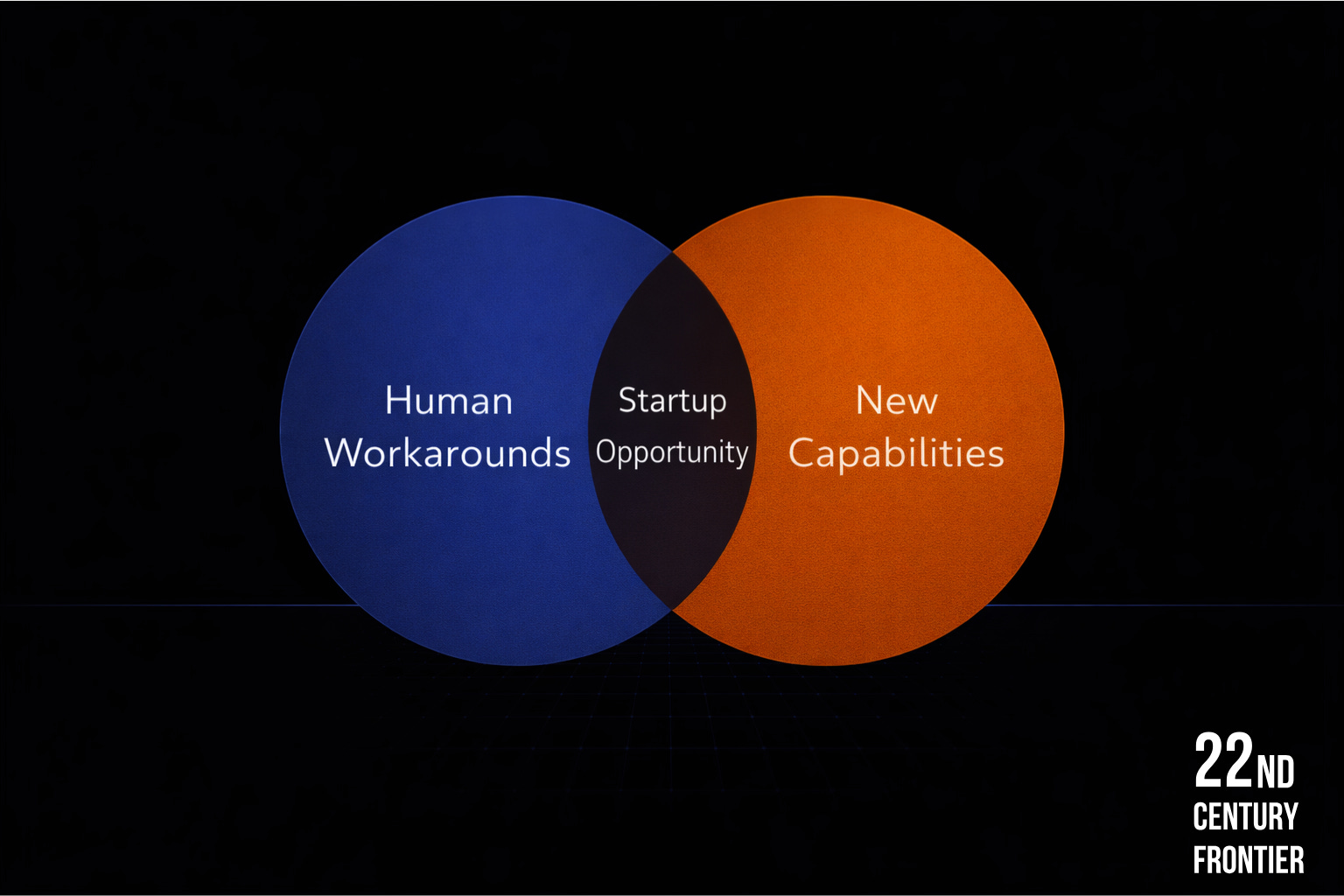
Strong startup ideas usually start with one of two lenses:
Behavioral friction
People are doing something in a clumsy, inefficient, or manual way because better tools do not exist or are inaccessible.
Structural change
Technology, regulation, or distribution shifts make a previously impossible or unviable solution suddenly practical.
Most successful startups sit at the intersection of both.
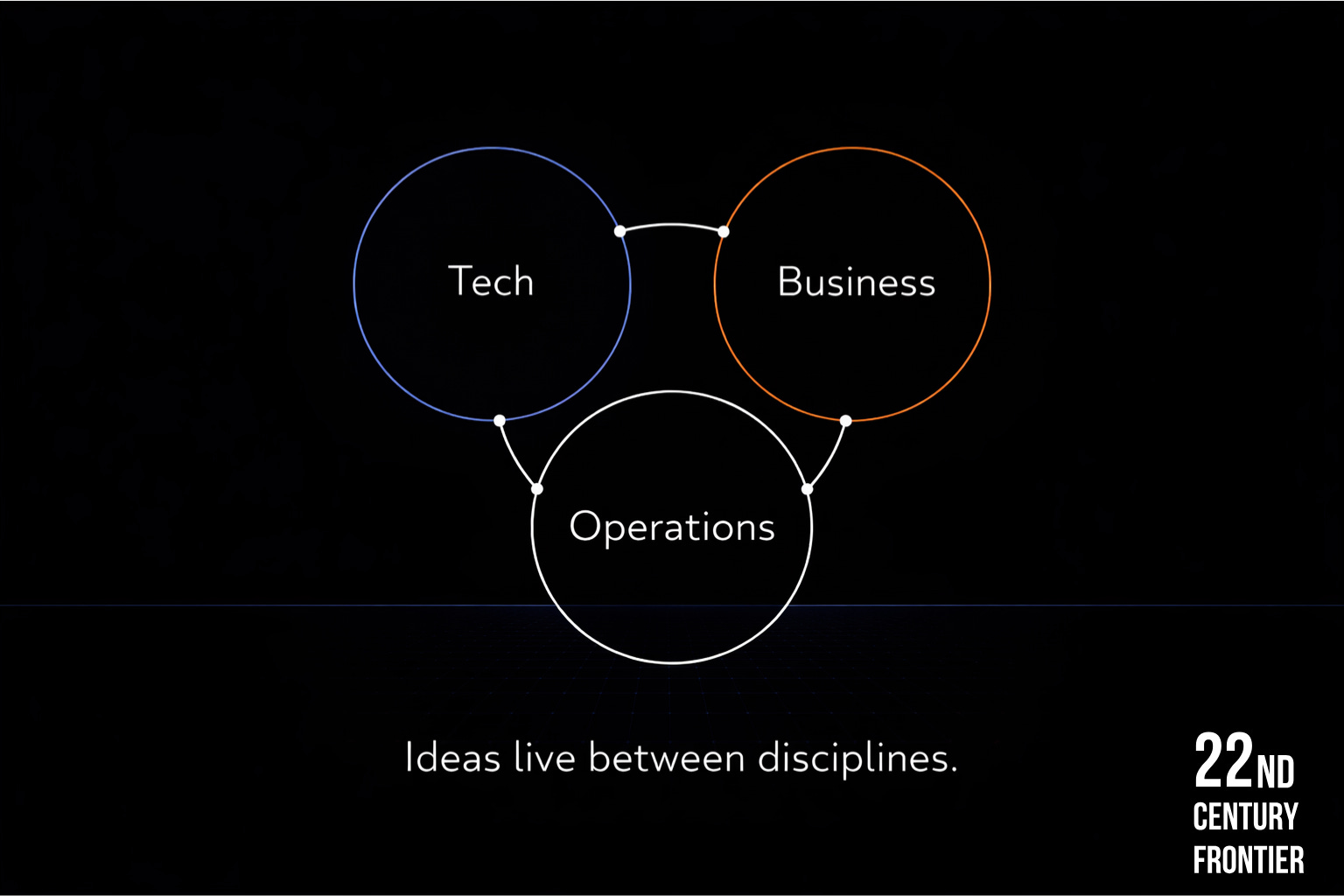
Founders with business backgrounds tend to notice behavioral gaps.
Engineers tend to notice technical inflection points.
The most durable ideas combine both perspectives, often unintentionally.
Timing matters more than originality.
2. Start With Founder-Market Alignment, Not Ideas
Before looking outward, look inward.
The fastest way to waste months is chasing an idea in a market you do not understand or cannot access.
Ask yourself:
What industries have I spent real time in?
Where do I already have credibility or relationships?
What type of customer can I realistically sell to?
Do I prefer long sales cycles or fast feedback?
Am I better suited to consumer, SMB, or enterprise?
This is not about limiting ambition.
It is about eliminating dead ends early.
Clarity on what not to build is a competitive advantage.
If you have never sold to regulated industries, fintech may be a painful starting point.
If you have no patience for long procurement cycles, enterprise software will drain you.
Reduce the surface area.
Then explore deeply.
3. Borrow Models, Change Execution
Original ideas are rare.
Proven business models are everywhere.
A smarter approach is to study what already works, then ask:
“Where does this model break, and can I fix that?”
Instead of copying products, copy mechanics.
Examples of models to study:
Marketplaces with liquidity constraints
Vertical SaaS with compliance friction
Usage-based pricing replacing licenses
Workflow automation replacing human coordination
Then change one variable:
customer, geography, distribution, or economics.
This approach is especially powerful in overlooked markets or industries with poor tooling.
You are not cloning success.
You are translating it.

4. Old Industries Hide New Problems
Some of the best opportunities live in places that feel unglamorous.
Logistics.
Construction.
Insurance.
Agriculture.
Energy operations.
and more!
These sectors often rely on outdated software, fragmented workflows, and institutional habits that no one questions anymore.
The opportunity does not come from disruption rhetoric.
It comes from listening.
One conversation with a mid-level operator can reveal problems that cost millions annually but feel “normal” internally.
The key is access.
Cold outreach works poorly.
Warm introductions and genuine curiosity work far better.
Do your homework.
Learn the language.
Ask how work actually gets done.
People rarely articulate problems until someone gives them permission to complain intelligently.
5. Insight Comes From Proximity, Not Research
Search engines do not surface real pain.
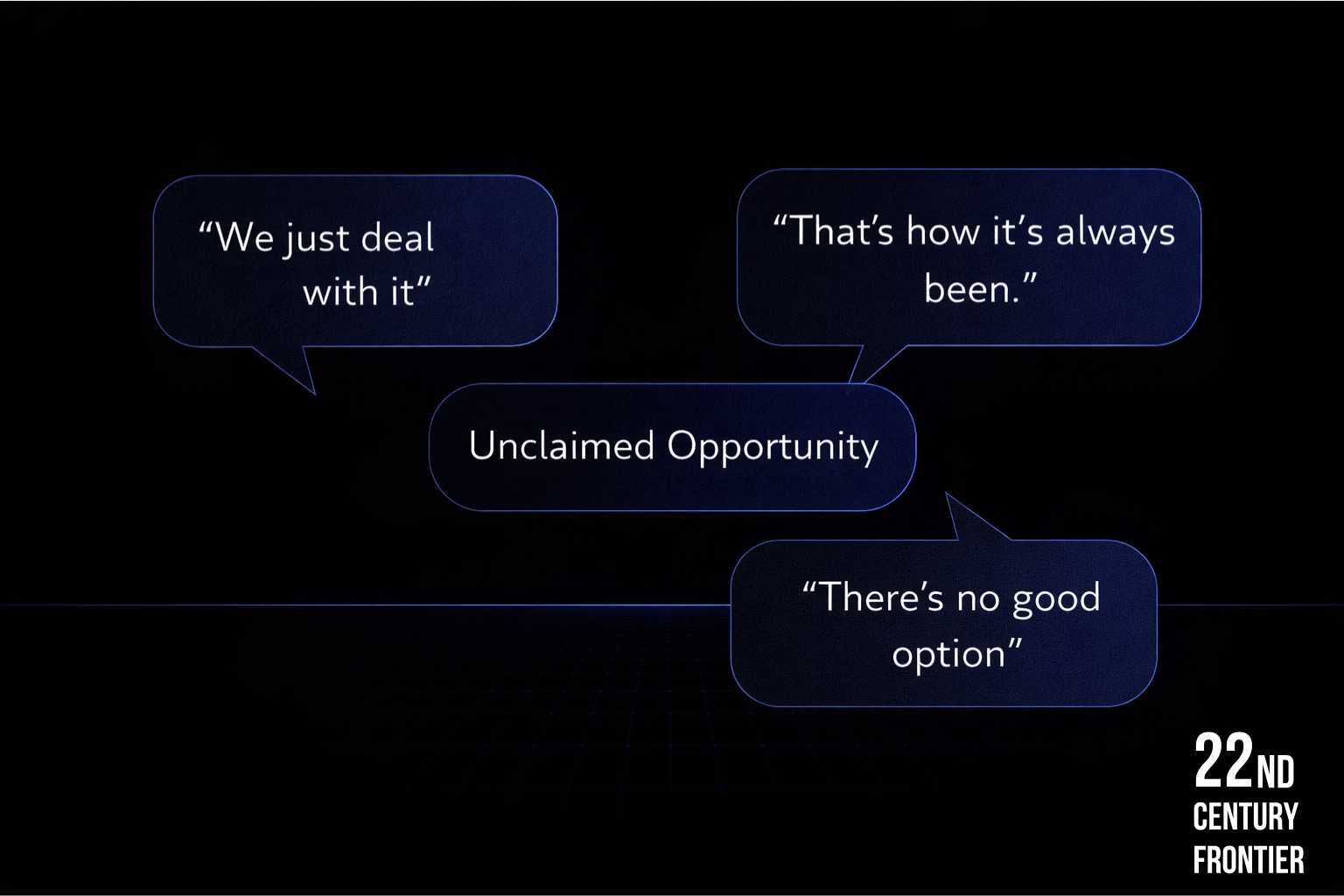
People with real problems are busy solving them poorly. They are not writing essays about it.
Insight comes from repeated exposure to the same frustration across different conversations.
To find them:
Talk to operators, not executives
Ask about workarounds, not tools
Listen for emotional language: frustration, embarrassment, exhaustion
When multiple people describe the same workaround independently, you are onto something.
This requires patience and pattern recognition.
You are not looking for feature requests.
You are looking for structural tension.
6. Pressure-Test Every Idea With Business Reality
Every idea should immediately face a brutal filter.
Ask:
Who pays?
Why now?
How often?
What replaces this if we do nothing?
Then pressure-test economics early:
Pricing tolerance
Sales friction
Implementation effort
Ongoing support load
Competition is not a reason to quit.
It is a signal to sharpen positioning.
Ignoring competition is not optimism.
It is negligence.
7. Let Annoyance Become a Signal
Pay attention to what consistently irritates you.
Friction you experience personally is often shared by others like you.
The trick is not to complain, but to pause and ask:
“Why does this exist in this form?”
Annoyance is often an early warning system for inefficiency.
Some founders train themselves to treat frustration as a research trigger, not an emotional response.
That habit compounds over time.
8. Talk to People Outside Your Bubble
Ideas rarely appear in echo chambers.
If you only talk to people like you, you will only see problems you already understand.
Deliberately seek conversations with people in adjacent or unfamiliar roles.
If you are technical, talk to:
Sales teams
Operations managers
Compliance officers
If you are business-oriented, talk to:
Engineers
Data analysts
Infrastructure teams
Different roles see different bottlenecks.
Communities matter:
Niche meetups
Industry Slack groups
Professional forums
Avoid generic startup events. Seek functional depth.
You do not need to pitch.
You need to listen.
9. Combine Known Models With New Contexts
Most innovation is recombination.
Take a known business model and apply it to a domain where it has not been optimized.
Common reusable models:
SaaS subscriptions
Marketplaces
Usage-based pricing
Embedded finance
Vertical-specific tooling
Instead of asking “What’s new?” ask:
Where does this model not exist yet?
Why has no one applied it here?
What assumption would need to break?
This is not about forcing novelty.
It is about finding mismatch.
Where expectations are low, small improvements feel transformational.
10. Start Before You Are Confident
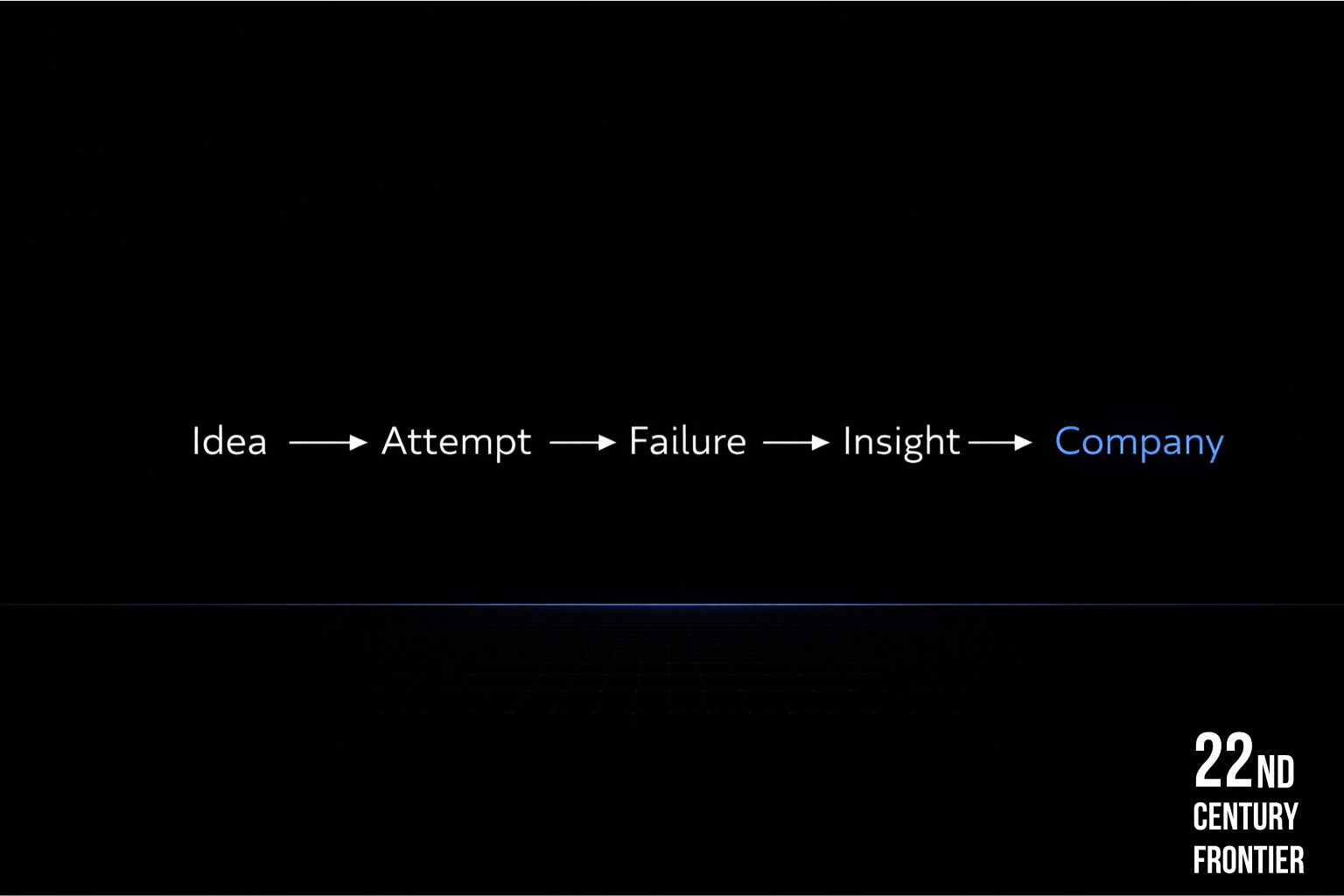
Many meaningful startups did not begin as the thing they became.
They started as:
Internal tools
Side projects
Services
Narrow solutions
Then evolved based on usage.
For example:
Twitter (now X) emerged from a podcast platform
Shopify began as a tool for selling snowboards
Instagram started as a location-based app
Progress creates information.
Waiting for certainty creates nothing.
11. Final Thoughts
There is no universal framework that guarantees a great idea.
But there is a repeatable way to increase exposure to insight.
Talk to real people.
Reduce your search space.
Pay attention to friction.
Study how money flows.
Act before you feel ready.
Great ideas are not discovered in isolation.
They are uncovered through engagement.
Sometimes the fastest way to find the right idea is to start with the wrong one and learn faster than others quit.
The work is not glamorous.
But it is effective.
And effectiveness compounds.
Continue Exploring the Frontier
If this piece resonated, you may want to go deeper.
Here are three recent articles readers found especially useful:


Each one tackles a different part of the same challenge: building with intent, not hope.
If you are serious about shaping the future rather than reacting to it, you are exactly where you should be.
WHY SUBSCRIBE | PREMIUM RESOURCES | ENTERPRISE PLAN | ADVERTISE
Really appreciate the emphasis on founder-market alignment before idea generation.
Too many accelerators and programs push people to "just start building" without addressing the fundamentals of whether someone can actually execute in a given market.
"Clarity on what not to build is a competitive advantage."
This 🔥 we never had so many opportunities. You have to pick wisely.
There are so many gems in this article, love
it! Thanks Petar 🙏🏻