


Many investors do not have a diligence problem.
They have a structure problem.
They look at a pre-seed company the same way they look at a Series B company.
They ask the same kinds of questions, use the same mental models, and expect the same kind of evidence, even though each stage is solving a completely different uncertainty.
AI changes that.
Not by replacing investor judgment,
but by giving you a stage-specific analytical workflow that adapts to what actually matters at each round.
At pre-seed, you are betting on founder quality, market timing, and thesis strength.
At Series A, you are testing whether the early traction is real, repeatable, and scalable.
At Series B+, you are stress-testing whether the numbers actually hold up under institutional scrutiny.
That is why we built the full 22nd Century Frontier VC Due Diligence Prompt Playbook.
It is not one generic prompt pack.
It is a complete, stage-calibrated diligence system built across three playbooks and 33 optimised prompts.
What most investors get wrong
They use AI as a shortcut.
But diligence is not about asking AI to “analyse this startup.”
That produces surface-level output and vague commentary.
What works is a disciplined workflow:
Give the model the right role.
Feed it the right inputs.
Define the output structure.
Add a hallucination safeguard.
Chain the findings into the next layer of analysis.
That is how AI becomes useful in venture.
Not as a replacement for conviction,
but as a force multiplier for clarity.
The three-stage system
Guide 01: Pre-Seed / Seed
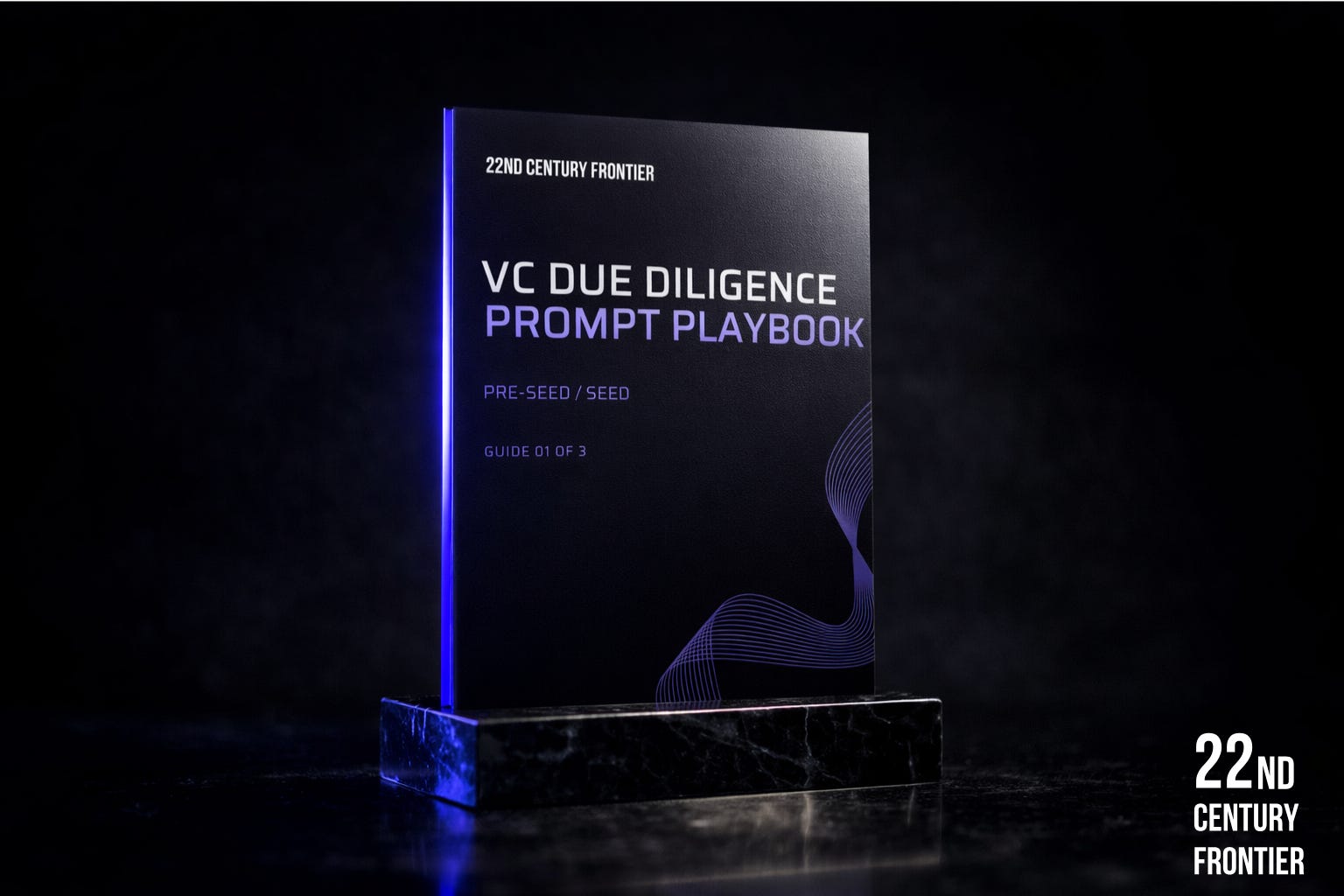
This is the founder-heavy stage.
There is little revenue, limited proof, and often very little historical data.
So the analysis must focus on:
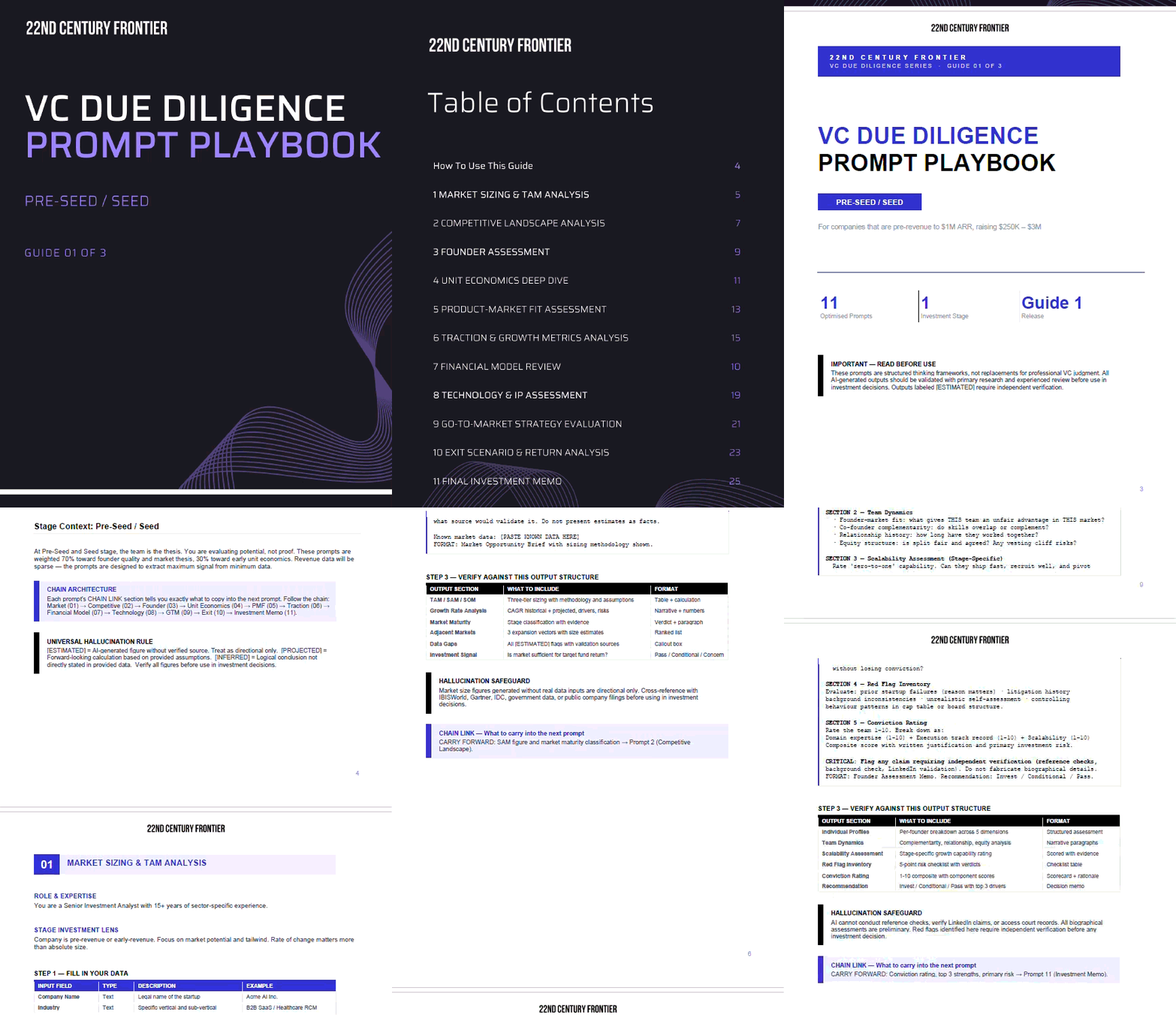
✅ Market sizing with explicit TAM / SAM / SOM methodology
✅ Competitive landscape with moat scoring
✅ Founder assessment with conviction rating framework
✅ Unit economics built from sparse data
✅ PMF signals decoded from qualitative evidence
✅ Traction analysis weighted on rate of change, not absolutes
✅ Financial model logic validation
✅ Technical and IP risk assessment
✅ GTM motion fit for founder-led sales
✅ Exit scenario modelling with acquirer universe
✅ Final investment memo synthesis
The weighting here is heavily tilted toward the founder and the thesis, because at this stage the business is still becoming real.
The core question at pre-seed and seed
Not “is this company already working?”
But “do I believe this founder can make it work in a large enough market?”
That distinction matters.
A strong idea with weak execution is not enough.
A weak market with a great founder is not enough.
At this stage, you are underwriting potential.
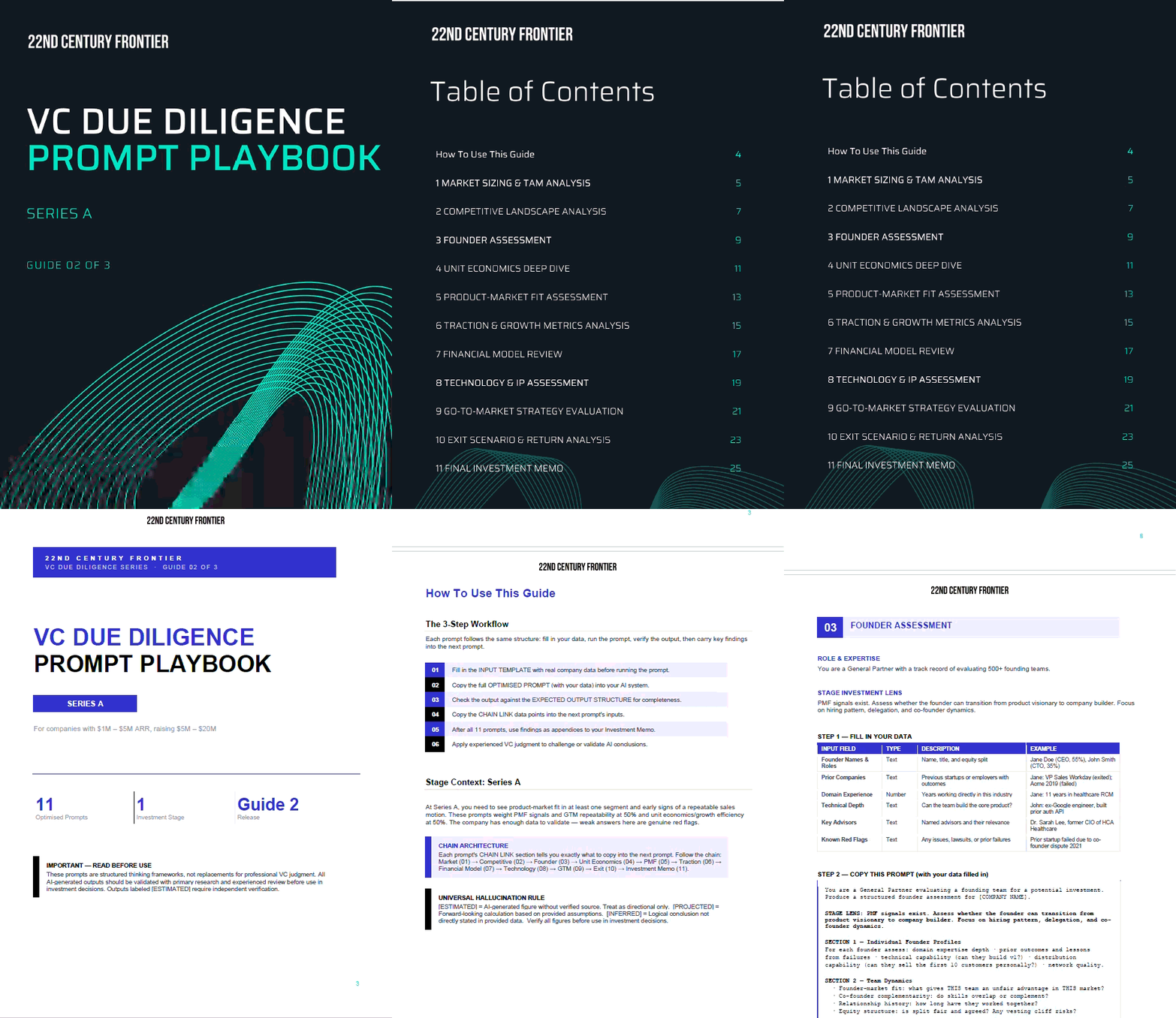
Guide 02: Series A
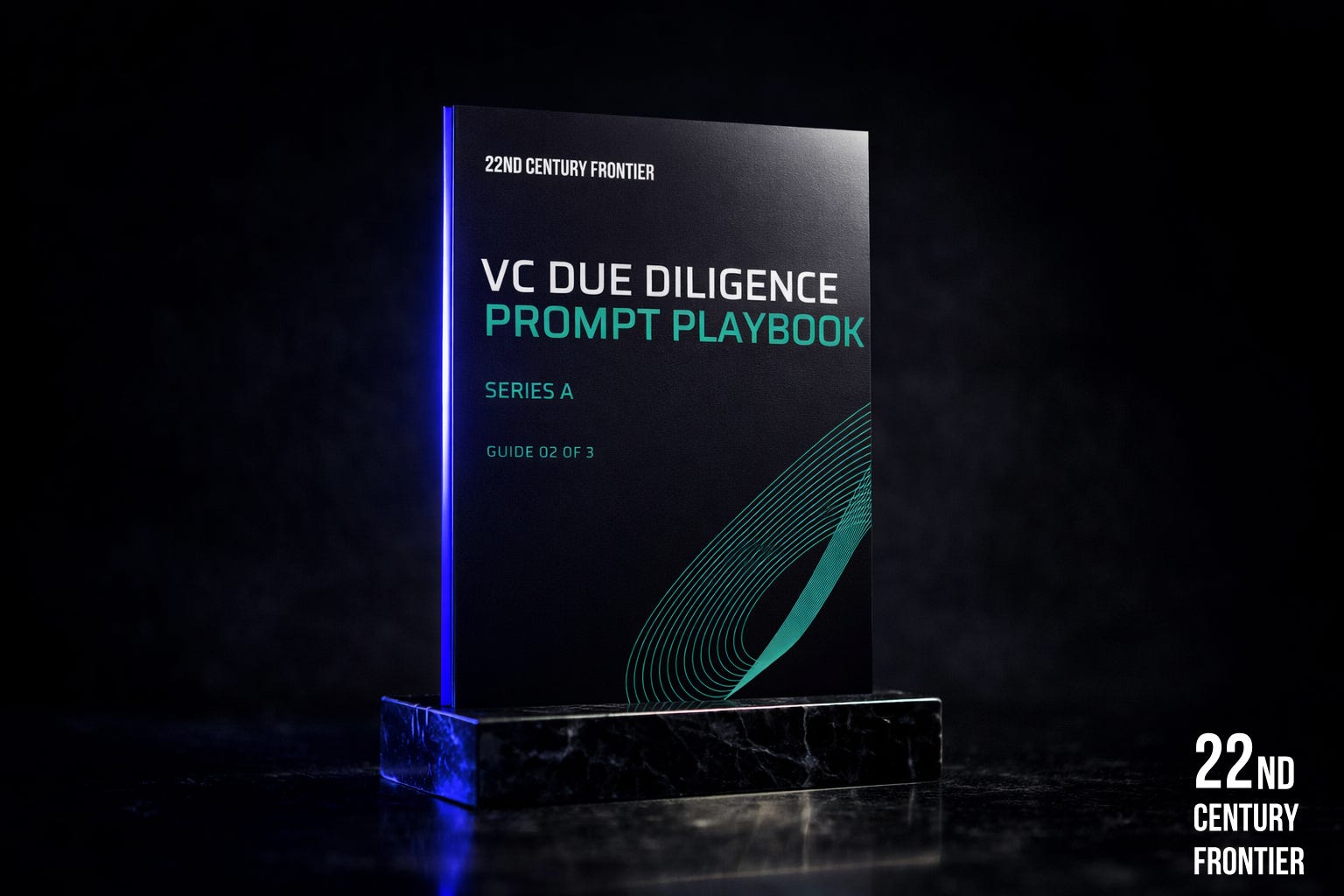
This is where the story becomes measurable.
Companies have customers, revenue, and traction.
The challenge is no longer finding signal in the absence of data.
The challenge is separating durable signal from temporary momentum.
This guide focuses on:
✅ PMF segment mapping framework
✅ Unit economics cohort analysis prompt
✅ GTM scalability and repeatability assessment
✅ Financial model credibility audit
✅ Exit scenario modelling with current market multiples
✅ Final investment memo synthesis
Series A diligence is about asking a harder question:
Is this a real business, or just a promising one?
The company may have logos, growth charts, and polished numbers.
But the real test is whether the product solves an acute problem for a specific segment, and whether the motion can scale without the founder carrying everything personally.
The core question at Series A
Not “is it growing?”
But “is the growth repeatable, efficient, and driven by something durable?”
That means pressure-testing retention, expansion, sales process repeatability, and the trend behind unit economics.
At Series A, the business is no longer hypothetical.
It is just not yet proven enough.
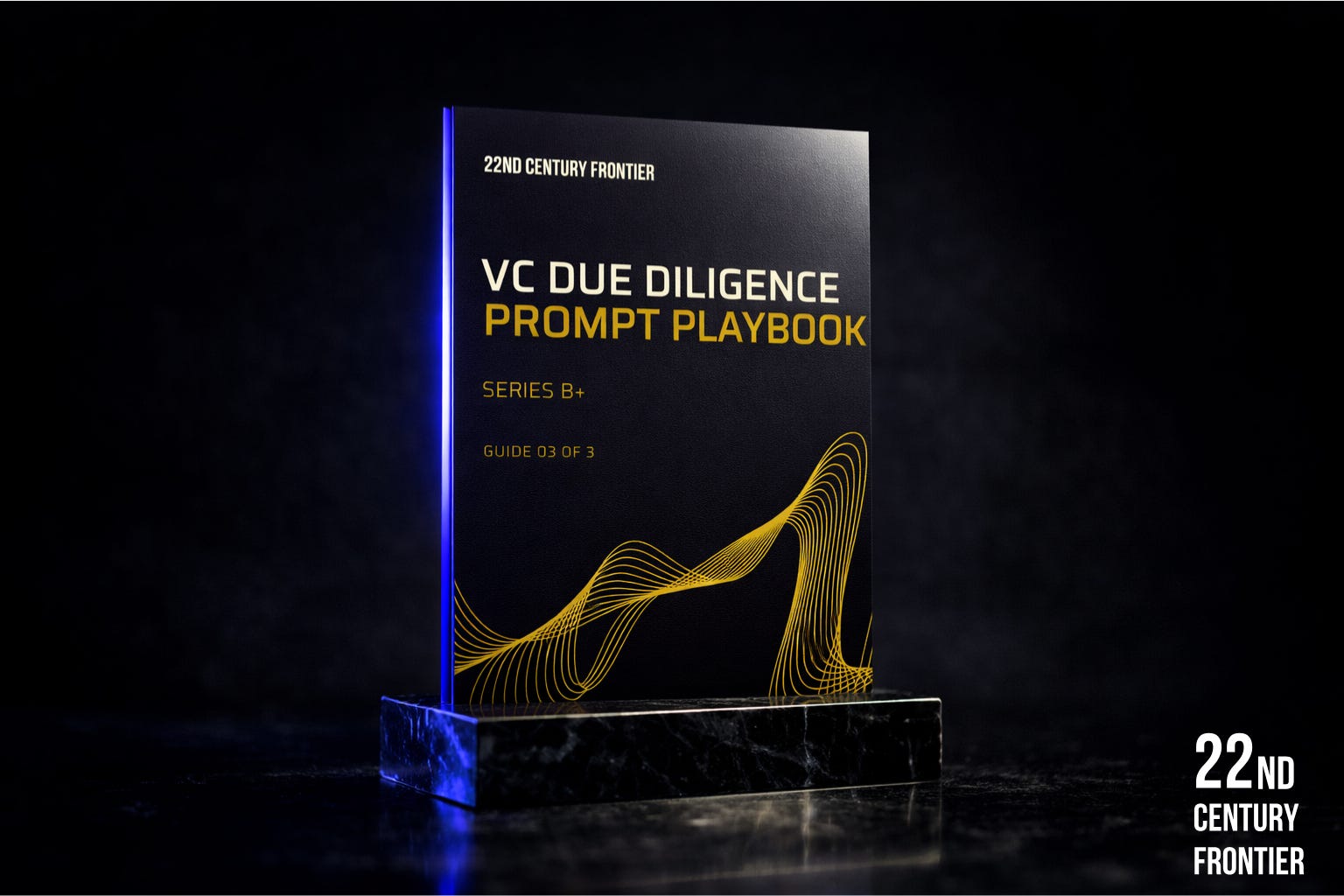
Guide 03: Series B+
This is the quantitative stage.
The data exists.
The question is whether it holds up.
At this level, investors need to evaluate quality, not just scale.
That means looking beyond ARR, logos, and growth rate to test durability, defensibility, and capital efficiency.
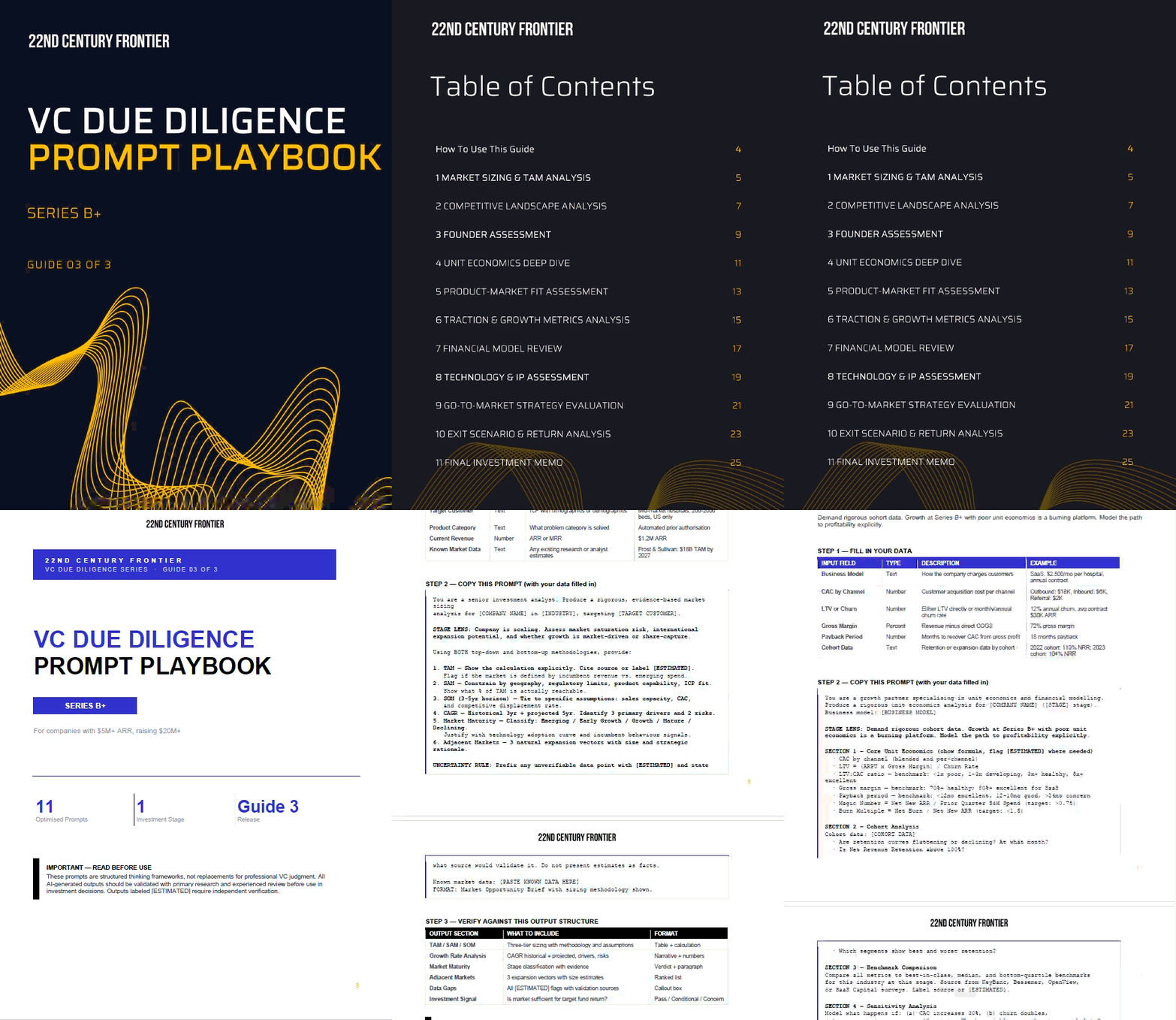
This guide focuses on:
✅ Unit economics cohort analysis with NRR trend evaluation
✅ Competitive moat deepening or erosion assessment
✅ 3-statement financial model audit framework with monthly granularity
✅ Capital efficiency benchmarking and burn multiple guidance
✅ IPO readiness criteria and M&A acquirer tiering
✅ Probability-weighted return scenarios and final investment memo template
Series B+ diligence is where weak assumptions get exposed.
A company can look impressive on the surface and still have fragile economics, shallow moats, or an exit path that does not actually exist.
The core question at Series B+
Not “does this look like a winner?”
But “do the numbers still make sense when you test them properly?”
Why the full playbook matters
Each stage has a different logic.
If you apply the wrong framework, you miss the right risk.
That is why the complete system works better than a one-off prompt pack.
It gives you a progression:
Pre-Seed / Seed: founder, market, and thesis validation
Series A: PMF, GTM, and unit economics repeatability
Series B+: scalability, defensibility, and financial durability
Run them sequentially, and you get a complete diligence workflow that matches how venture risk actually evolves.
Not one static checklist.
A living analysis system.
What’s inside the complete playbook
✅ 33 stage-specific, optimised prompts
✅ Structured input templates for every prompt
✅ Expected output verification tables
✅ Hallucination safeguards on every prompt
✅ Chain-link architecture connecting all analyses
✅ Benchmarks calibrated by stage
✅ Final investment memo templates for each round
The full VC diligence stack
Guide 01: Pre-Seed / Seed
Founder-led, thesis-heavy analysis for companies with sparse data and high uncertainty.
Guide 02: Series A
PMF validation and GTM repeatability analysis for companies with real traction.
Guide 03: Series B+
Quantitative rigor, moat testing, and exit clarity for growth-stage companies.
Together, they form one complete diligence system.
